The Art of Timeless Design
Build a room that can evolve with you.
Begin with proportion
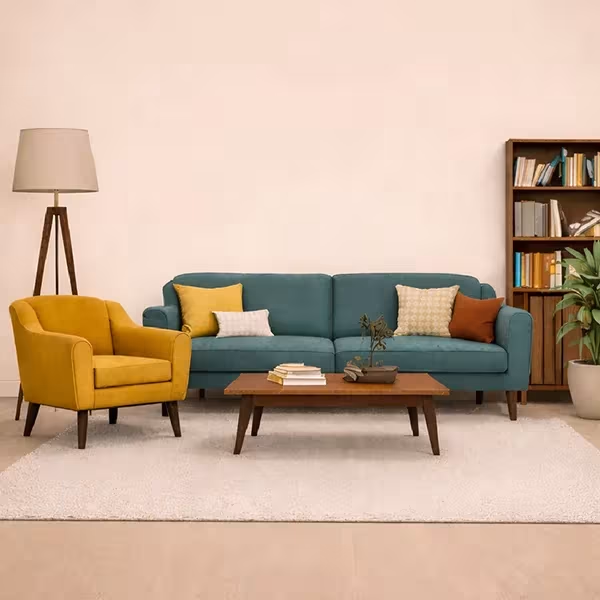
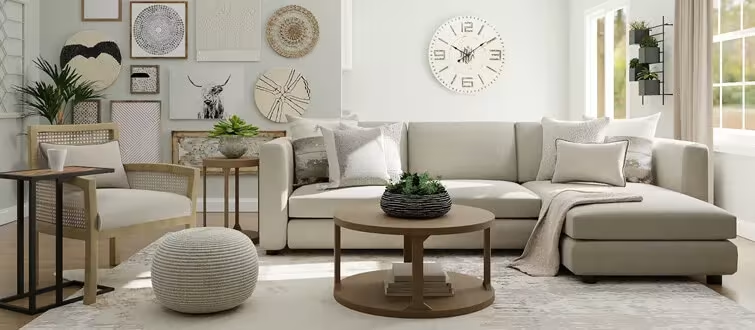
A room feels balanced when its furniture fits both its dimensions and its use. A sofa can be attractive yet overwhelm a small room; a table can be elegant yet leave too little space around the seats. Measure first and sketch the arrangement before selecting pieces.
Choose a few main items to anchor the room. Keep sightlines, doors and movement in mind. A clear layout provides a more useful foundation than choosing everything around a short-lived trend.
Choose adaptable core pieces
Simple silhouettes and finishes you enjoy can make it easier to update a room over time. Consider whether a chair could work in another room or whether a table suits more than one seating arrangement. Adaptability depends on dimensions and construction as well as appearance.
Avoid expecting any piece to be universally timeless. Your taste and needs may change. A good decision is one that suits your home now and offers reasonable flexibility later.
Add personality through smaller details
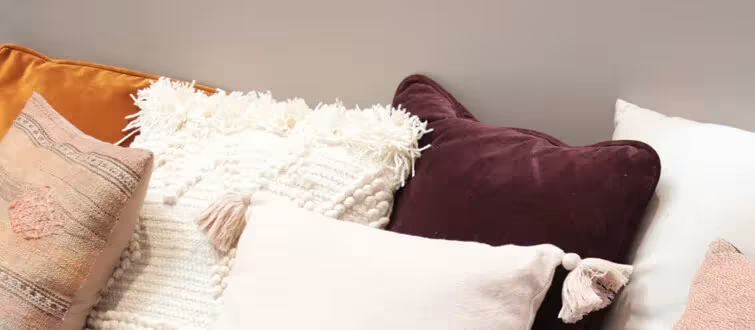
Artwork, cushions, lamps and textiles can introduce stronger colours without determining the whole room. Use them to make the space personal rather than treating a neutral palette as an end in itself.
Mixing an existing favourite with a new piece can be more interesting than purchasing everything as a matching set. Look for a relationship in scale, tone or texture so the combination feels intentional.
Plan for comfort and maintenance
A lasting scheme needs to work in daily life. Consider seating height, lighting, useful surfaces and storage. Confirm care instructions for selected materials and choose finishes appropriate to how often the room is used.
For a family space, discuss cleaning and wear. For a guest room, consider how the furniture will accommodate visitors with different needs. Practical decisions help the room remain useful as well as attractive.
Create a focused design brief
Share room measurements, photographs and a few references. Explain what you want to keep, what is not working and which changes matter most. The team can then discuss furniture or interior design options with a clear understanding of your priorities.
Our interior design and decor enquiry form is a useful starting point for a coordinated scheme. Scope, materials, pricing and schedule are confirmed for the agreed project.
Your planning checklist
- Measure before selecting the main pieces.
- Keep circulation and everyday use clear.
- Choose finishes you enjoy beyond a trend.
- Use smaller details to refresh the room.
Explore our furniture collection or interior design and decor services. For tailored options, send your requirements to our team.
Make the ideas work for your space.
Share photographs, measurements and the furniture or interior details you have in mind. We’ll discuss suitable options and confirm your quotation.
Discuss your requirements →A few useful answers.
Does timeless design have to be neutral?
No. Colour can be part of a lasting scheme when it suits your preferences and is balanced with the room.
Can I keep older furniture in a new scheme?
Yes. Share photographs and dimensions so the design can work around pieces you want to retain.
Should I replace every piece together?
Not necessarily. A staged plan can prioritise the items that have the greatest effect on comfort and layout.